
A seasonal reflection on the state of men
This article was first published in the December 2024 edition of Counselling Matters, the members’ e-zine by the National Counselling and Psychotherapy Society.
My journey to the campfire
I find particular, melancholic beauty in autumn and winter. I love the feeling of hunkering down in the evening, cooking and eating comfort foods and wrapping up in my favourite woolly jumper. Autumn evokes a more reflective and introspective state, and an opportunity to consider aspects of my identity in relation to the communities I identify with. I had the absolute joy of attending my first “Men’s Campfire Supper” a few weeks ago. Men are facing a mental health crisis, and this is my first foray into activities designed specifically to meet men where they are with their mental and emotional wellbeing.
As a self-identified cisgender man in 2024, I am no stranger to the societal expectations and pressures that men face daily. I am a counselling placement student, embarking on the final throes of qualification to Level 4, with almost 30 client hours under my belt. At the age of 39, I am a geriatric millennial, have a young family with some complex needs, and I hold down a full-time professional job in addition to my academic training and experiential client hours. I’ve also been in regular therapy since the UK first went into lockdown. I have first-hand experience as a man struggling with their own wellbeing.
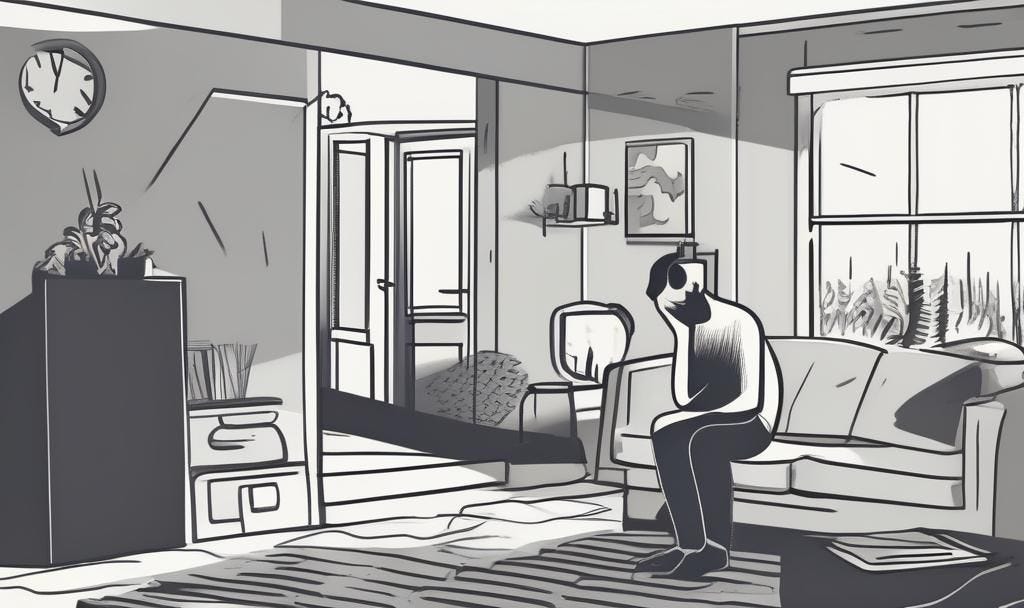
My clients are all men. My therapist is a man. My supervisor is a man. My tutor is a man. I have gravitated towards men in my counselling journey throughout. As a person-centred counsellor, I am continually developing my awareness of my self-structure, and I understand where my desire to work with men, in part, comes from my childhood experiences of men and boys. However, I am also highly aware of the crisis in men’s mental health, and my desire to help. In the UK, we’re consistently reminded that suicide is the biggest killer of men under 50, but we’re also told that men are far less likely to self-identify as having mental health problems or seeking help than women. During a series of “Feel Good in the Forest” sessions I attended this year, funded by a social prescription scheme, the leaders made a point of asking me if I would mind having my photo in promotional material in order to demonstrate that “men do attend our sessions!”. Something is wrong with the way that help is being offered to men.
Social conditioning of men, according to the WHO, can significantly impact how quickly, if at all, men identify and access mental health support services. Whether or not we as therapists personally reject traditionally masculine values and presentations, it feels clear to me that the traditional access routes to counselling have a limited success rate. NHS statistics from 2020-2021 showed that Improving Access to Psychological Therapies (IAPT) referrals show that only 36% of those referrals were for men. This suggests a gap that reveals more than mere reluctance of men to engage. More needs to be done.
Holding the space
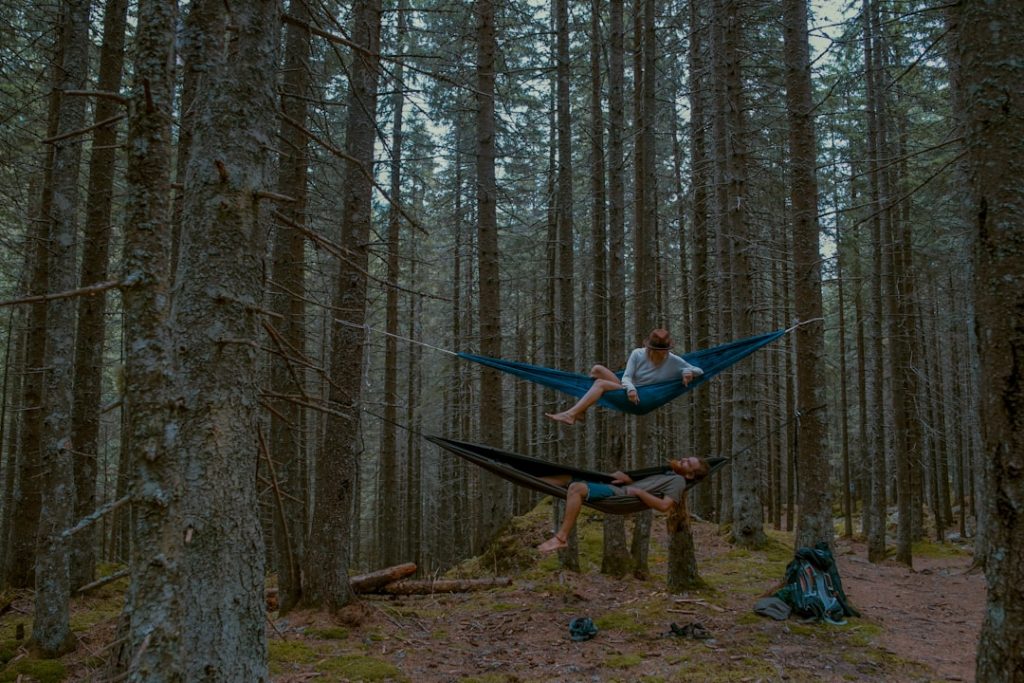
As I sit around the fire, with a group of men I have never met, I am suddenly very aware of masculinity. I am not, in my opinion, particularly masculine presenting in the traditional sense. However, I know that I can appear masculine, with my ever-greying beard, deep voice and various tattoos on show. But these features are, I feel, softened with nose and ear piercings, glasses and black nail polish. I notice the manly presence of an older guy, and the softer presentation of another counselling student. I realise how different expressions of masculinity encircle the fire, each face in the flickering light embodying a unique story. As we settle into preparing and cooking a meal of spiced pumpkin and sweet potato stew, our facilitator notes that he has no idea how to cook but throws himself into the activity regardless. It challenges my own perceptions of masculinity and the vulnerability it takes to admit unfamiliarity. I wonder how many raised eyebrows these men have experienced in their lives as they experiment with vulnerability.
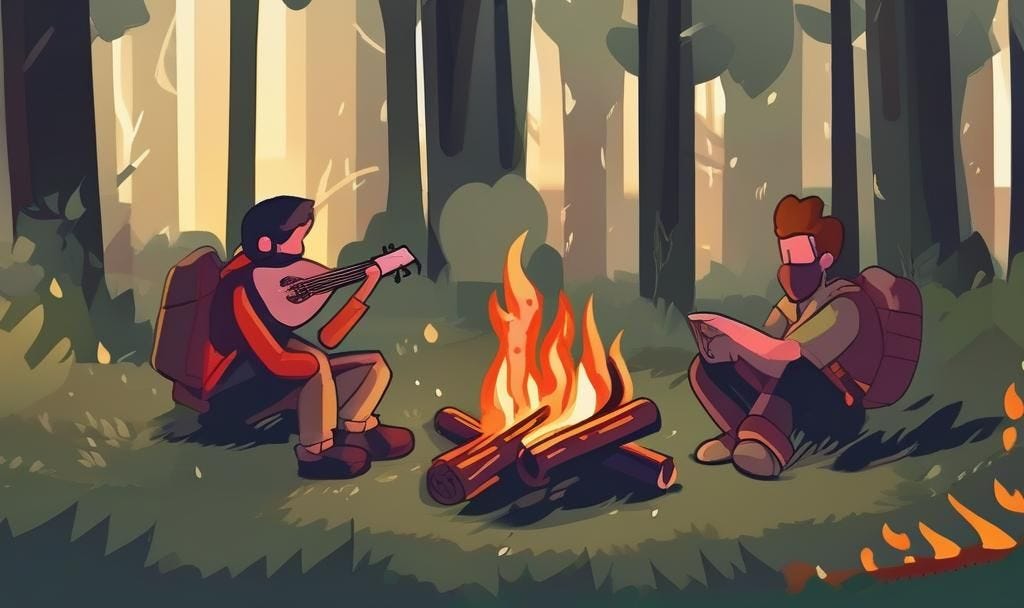
Studies, such as those by Janelle Goodwill and Levant et al. in 2020, have shown that deeply embedded traditional masculine norms, such as strength, self-reliance and control, play significant roles in men not receiving adequate mental health support. The fact that men-only groups have been shown to provide the valuable safe-space men need suggests that men can and will open up about their mental health if they feel the person they are talking to can relate to them, and that they can relate to those around them. How we are perceived and accepted by others seems to be crucial in men feeling able to access and share their emotions and experiences, and I am heartened when I contextualise this with the therapy I am now delivering using the Person Centred Approach. Rogers stated in his 1980 book ‘A Way of Being’ that “When someone really hears you without passing judgement on you, without trying to take responsibility for you, without trying to mold you, it feels damn good!”. Was my judgement perceived by my facilitator, I wonder?
We move through the meal, introducing ourselves and making good on the invitation to share or motivations in joining the group. After some “craft and chat”, making bracelets and carving soapstone, we come back together around the flames to reflect on each of our personal interpretations and connections to the theme of ‘autumn’. Each man starts with the theme, quickly delving to depths I rarely experience from other men, staring into the fire as though the glowing embers were listening with an empathy of their own. Stories of burnout, of loss and of need begin to be told. Nobody interrupts. Nobody offers solutions. I become overwhelmed with the sense of being ‘held’, as I feel held by my therapist. I wonder how many of my fellow companions have experienced being held like this before. The session ends with a mindfulness activity, quiet reflection influenced by the words of our facilitator, with only ourselves and the stars as our witness.
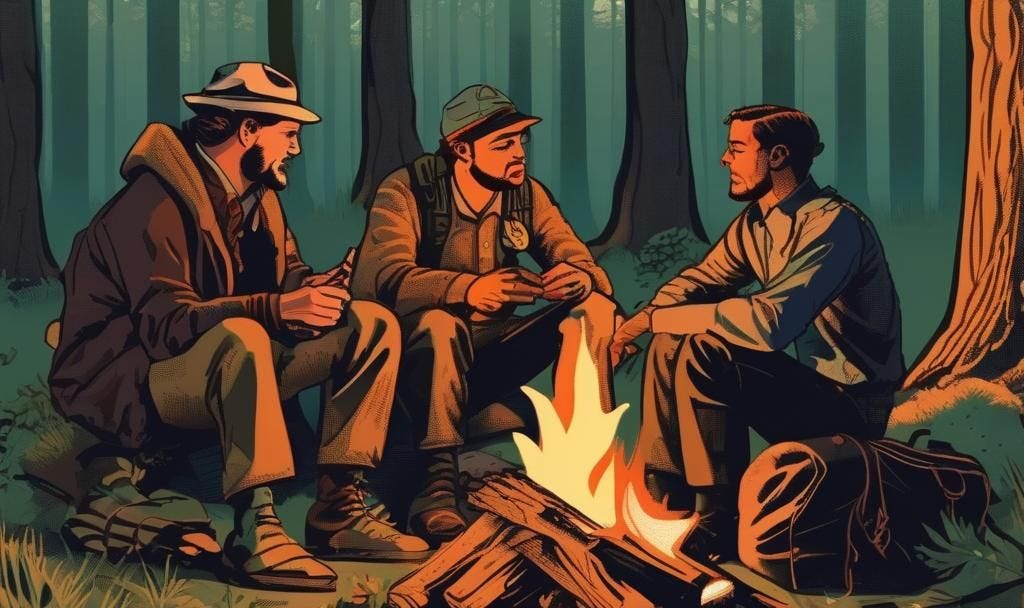
I come away from the session feeling thoroughly enriched, but exhausted. I feel annoyance that I have to wait another month for the next session. I have long recognised the energy I draw from being in woodlands, enjoying a fire at dusk. And I become aware of the privileged position I am in to have been able to fully immerse myself in the activity as a man, but also observe the activity as a trainee counsellor. The experience was profound, and I consider how I might offer this experience to my companions in the next, eagerly awaited session.
You can lead a horse to water
This type of activity is but one example of the many ways in which men can be reached by meeting them where they are. Not all clinical therapy can be delivered through media akin to this activity, but I would also pose a challenge to us as all as therapists that if traditional methods of clinical therapy aren’t reaching men effectively, then doesn’t the industry need to evolve? Issues of confidentiality, weather conditions in the UK etc. are frequently cited as obstacles that counsellors have to carefully control, but perhaps as an alternative to casting the net as widely as possible with a clinical therapy room in a generic office space in the suburbs, might we seek to develop more niche therapy? If a counsellor chooses to censor elements of themselves in the name of ‘professionalism’, are they congruent enough to give their clients the most optimal therapeutic environment? In the Person Centred Approach, the congruence of the counsellor is critical in fostering a trusting relationship with the client.
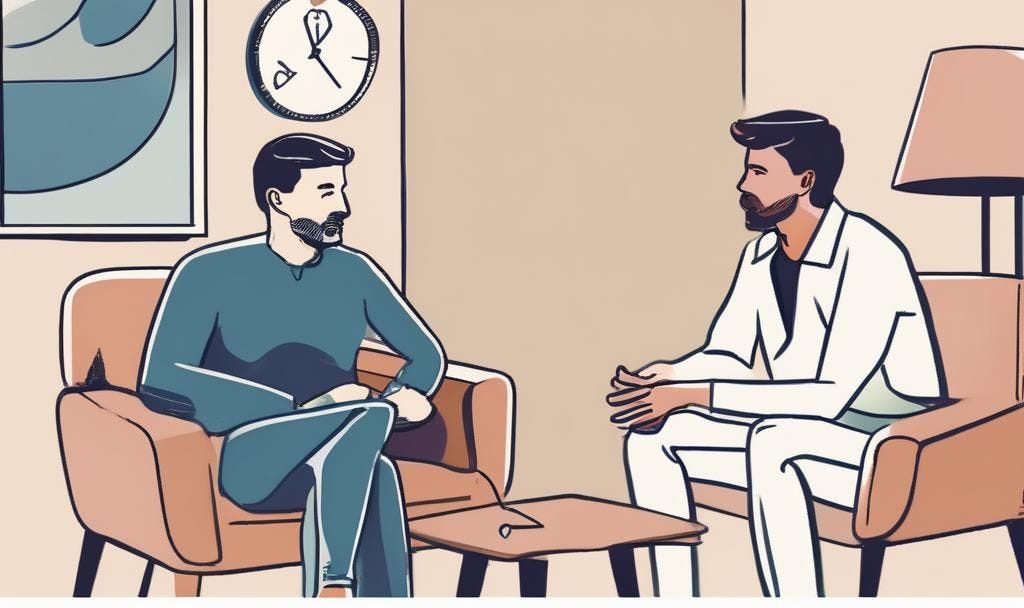
As I reflect on my experience of this activity, and of writing this article, I am drawn back to my own sense of masculinity. I’ve learned to hold this label with more fluidity these days, but it was not always so. In my mid-thirties, I began to question my identity, my sexuality, and my place in the world. The masculine ideals I’d inadvertently absorbed started to unravel. Through therapy, I was able challenge these views and begin to allow them to fall away and be more open to what I value, what I experience, and who I truly am. But I was fortunate in my circumstances at this time; I had support from my wife and those closest to me to make that leap of faith by challenging my own feelings of weakness, failure and inadequacy as a man. Many don’t have that, and that is why I passionately believe that we have to evolve. We have to meet men where they are.
As I sit in the fading warmth of autumn, I know we need to continue creating spaces where men can find empathy, vulnerability, and understanding, free from judgment. We, as counsellors, need to extend our empathic understanding beyond the therapy room to do this. As I finish this piece, I have decided to close my laptop and walk in the autumn breeze, meeting my brother in a fond childhood haunt.
Leave a Reply